
The affiliate marketing industry hit $15.7 billion in 2024 and keeps growing. If you're promoting digital products—software, courses, ebooks, SaaS platforms—you need networks that actually work for digital goods, not just retail junk. Here are the five networks worth your time in 2026, with the real details on ease of use, link generation, APIs, and which companies are actually on each platform.
1. PartnerStack
Best For: B2B and B2C SaaS and software products
PartnerStack is purpose-built for digital software companies. This isn't some general marketplace trying to do everything—it's laser-focused on SaaS and B2B tech products.
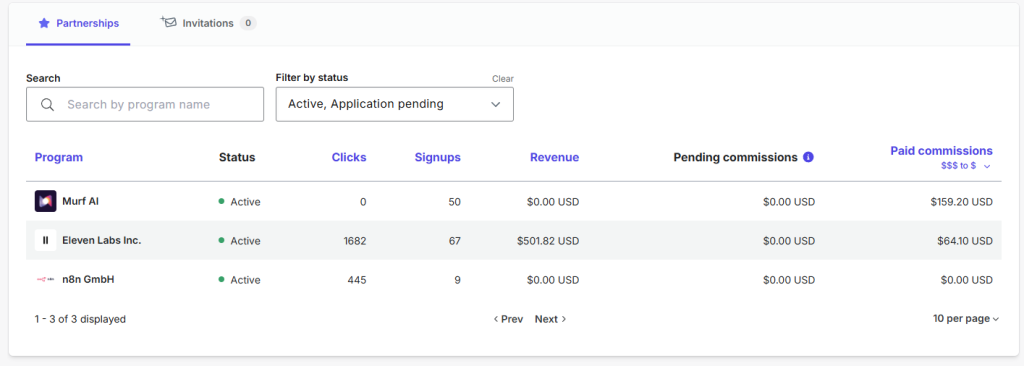
Current Major Vendors
- Webflow
- Monday.com
- Elevenlabs
- n8n
- Notion
- Vimeo
- Intercom
- Over 300 SaaS affiliate programs
Ease of Use
Link Generation: Dead simple. You get a dedicated partner dashboard where generating links takes seconds. Every partner gets their own unique referral links automatically.
Deep Linking: YES. PartnerStack supports deep linking through a wildcard system. You can create custom links to any product page without adding each URL manually. The platform uses https://acme.com/* wildcard functionality so you can link directly to specific landing pages, checkout pages, or product features.
Browser Extension: NO dedicated browser extension currently available.
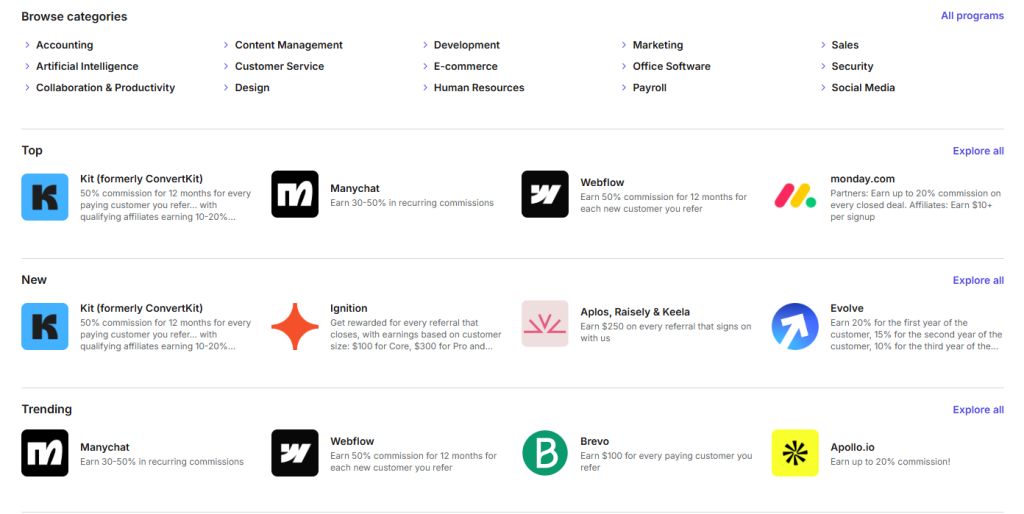
Affiliate Database: Strong marketplace discovery feature. You can browse through 300+ SaaS programs, filter by niche, and join programs directly. The interface shows commission rates, cookie duration, and program requirements upfront.
API: YES. Full REST API available with deep integration capabilities. You can programmatically:
- Generate affiliate links
- Pull commission data
- Automate reporting
- Set up Slack notifications for new referrals
- Integrate with CRMs and billing systems
The API is well-documented and designed for developers who want automation. You can connect it to data warehouses like Snowflake or BigQuery.
Pros
- Best-in-class UI/UX designed specifically for SaaS affiliates
- Handles all payouts automatically (Stripe, PayPal, direct deposit)
- Only $5 minimum payout threshold
- 90-day cookie duration standard across most programs
- Real-time tracking and analytics
- Email notifications when you earn commissions
- Up to 30% commissions (some programs)
- Single login for all programs—no juggling multiple dashboards
Cons
- Limited to SaaS/software products (if you want physical goods, look elsewhere)
- Smaller merchant pool compared to general networks (~300 programs vs thousands)
- No deep UTM analytics with single links—need multiple links to track which content converts best
- Platform is expensive for merchants (5-figure annual fees), so smaller vendors may not be on it
- Some users report occasional webhook issues and payment delays
Bottom Line: If you're promoting SaaS products, this is your top choice. The platform just works, the interface is clean, and the automated payouts mean you're not chasing down payments.
2. ClickBank
Best For: Digital info products, courses, ebooks, health supplements
ClickBank has been around since 1999 and has paid out over $7 billion in commissions. It's the king of digital information products.
Current Major Vendors
- Thousands of individual course creators
- Health and fitness digital programs
- Make money online training
- Self-help ebooks
- Dating advice products
- 4,000+ vetted digital and physical products
Ease of Use
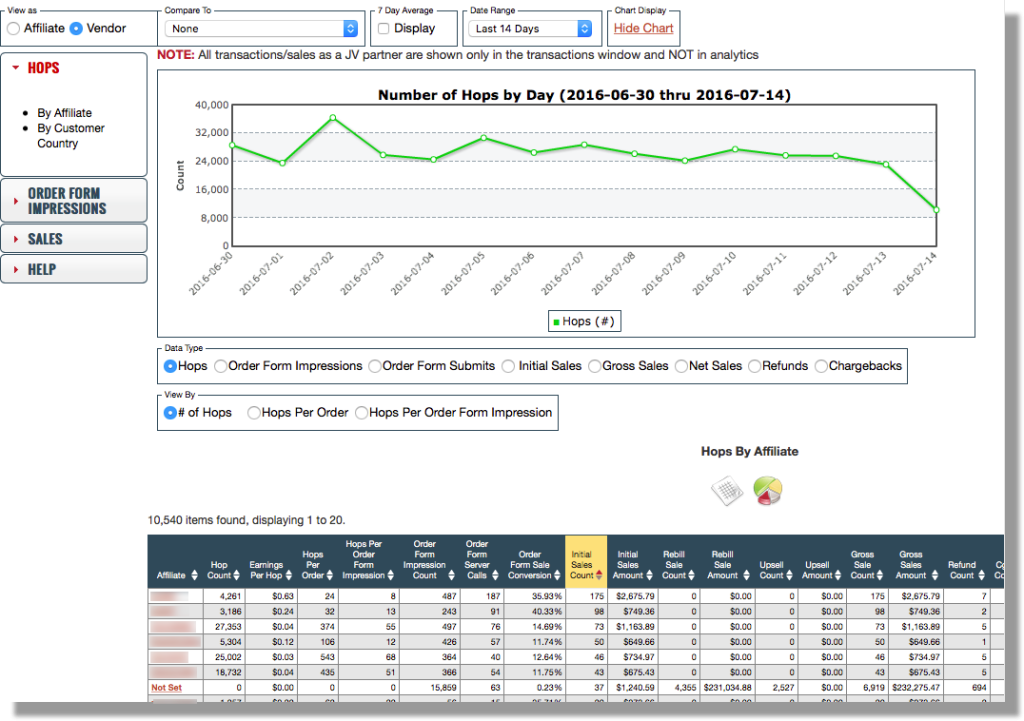
Link Generation: Extremely fast. You can sign up and start generating “HopLinks” within minutes—no website required, just your contact info. Navigate to the marketplace, find a product, click “Promote,” and you get your link instantly.
Deep Linking: Limited. ClickBank now supports “Direct Tracking Links” that let you link directly to specific landing pages within a vendor's site, but not all vendors have this enabled. You need to check if the vendor supports it in the marketplace. The traditional approach required vendors to set up custom solutions, making it clunky.
Browser Extension: NO official ClickBank browser extension. Some third-party WordPress plugins exist (like Auto Affiliate Links) that can automatically convert ClickBank product mentions to affiliate links, but these aren't from ClickBank directly.
Affiliate Database: Massive searchable marketplace organized by category. You can filter by:
- Gravity score (how many affiliates are successfully selling it)
- Average commission per sale
- Initial $/sale
- Product category
The marketplace is transparent about product performance metrics.
API: YES. ClickBank offers developer APIs including:
- Product search API
- Transaction reporting API
- Marketplace API for pulling product data
- Requires API clerk key from your account settings
The API is RESTful and works with any web client (.NET, PHP, Java, Python, Ruby). You can automate link generation and pull sales data programmatically.
Pros
- Insanely high commissions (50-75%+ on digital products)
- Fast approval—literally instant
- No website required to join
- Global reach in 190 countries
- 200 million customers in the ecosystem
- Weekly or bi-weekly payouts
- Huge product selection (4,000+ items)
- No upfront costs for affiliates
- Gravity metric helps identify winning products
Cons
- Reputation for low-quality products (lots of sketchy “make money fast” schemes)
- Refund rates can be high on info products
- Deep linking is limited and vendor-dependent
- Interface feels dated compared to newer platforms
- 24-hour cookie for cart additions (shorter than competitors)
- Some products are outright scammy—requires careful vetting
- No sophisticated tracking for content performance
Bottom Line: If you're okay with doing product research and can stomach some low-quality offers, ClickBank has unbeatable commissions on digital products. Just vet everything before promoting it.
3. Impact (formerly Impact Radius)
Best For: Premium brands across digital and physical products
Impact.com is the enterprise-grade solution. It's where serious publishers go to work with top-tier brands. Founded in 2008, it supports partnerships in 190+ countries with 135+ currencies.
Current Major Vendors
- Shopify
- Uber
- Airbnb
- WP Engine
- Semrush
- Target
- Many Fortune 500 brands
- 10,000+ advertiser programs
Ease of Use
Link Generation: Straightforward through the dashboard. Click on “Assets” or “Creatives” tab, find your merchant, generate text links or banners. Copy and paste into your content. Some merchants offer pre-made email campaigns and coupon codes.
Deep Linking: Not inherently supported at the platform level for all merchants. It's merchant-dependent—some allow it, some don't. No universal deep linking like PartnerStack.
Browser Extension: NO dedicated browser extension for affiliates.
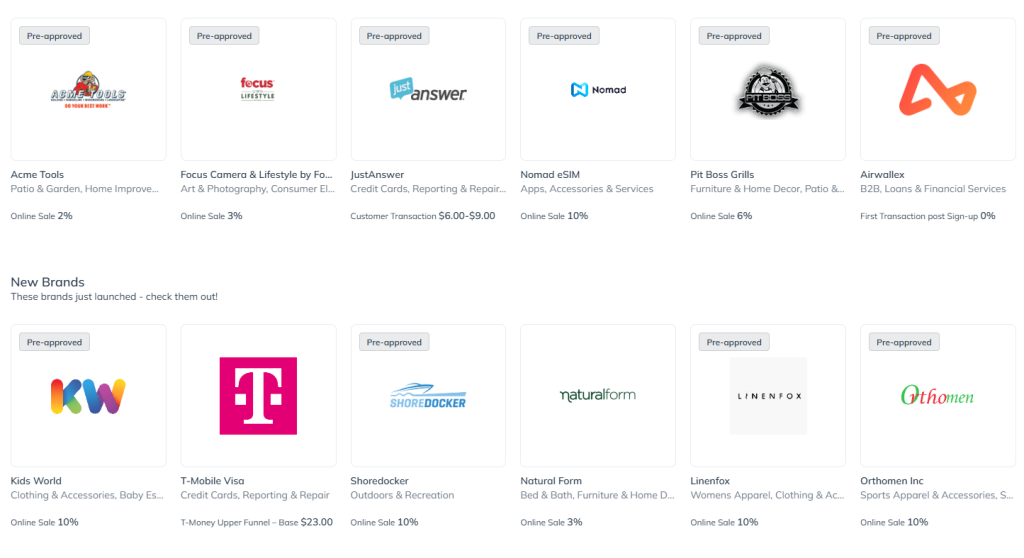
Affiliate Database: The “Discovery Marketplace” is robust. You can browse thousands of programs, apply directly, and see approval status. Filter by vertical (e-commerce, finance, SaaS, travel).
API: YES. Full REST API with extensive capabilities:
- Real-time conversion tracking
- Partner performance data
- Automated reporting
- Integration with Shopify, Salesforce, Google Analytics, AWS
- Custom dashboard creation
- Mobile app install tracking
- Cookie-less tracking solutions
Impact's API is considered best-in-class. The platform emphasizes advanced attribution models and future-proof tracking with AI and blockchain tech.
Pros
- Premium brand access—these aren't fly-by-night vendors
- Zero platform fees for affiliates (earn 100% of commissions)
- Real-time analytics and reporting
- Best-in-class tracking technology
- Multi-touch attribution
- Free educational resources (masterclasses, case studies)
- Professional interface built for 2026
- Fraud detection and brand safety
- Supports multiple payment methods
- API integrations with major platforms
Cons
- Application process—brands may reject you
- Requires more professional setup (website, content portfolio)
- Some merchants have minimum traffic requirements
- Recent controversy (kicked Honey extension off platform in January 2026)
- Pricing not transparent for merchants, which limits smaller vendors
- Learning curve steeper than simpler networks
- Commission rates vary widely by merchant
Bottom Line: If you have established traffic and want to work with recognizable brands, Impact delivers. The tracking is bulletproof, and you're partnering with companies people actually trust.
4. ShareASale (now merged with Awin)
Best For: Mix of physical and digital products with retail focus
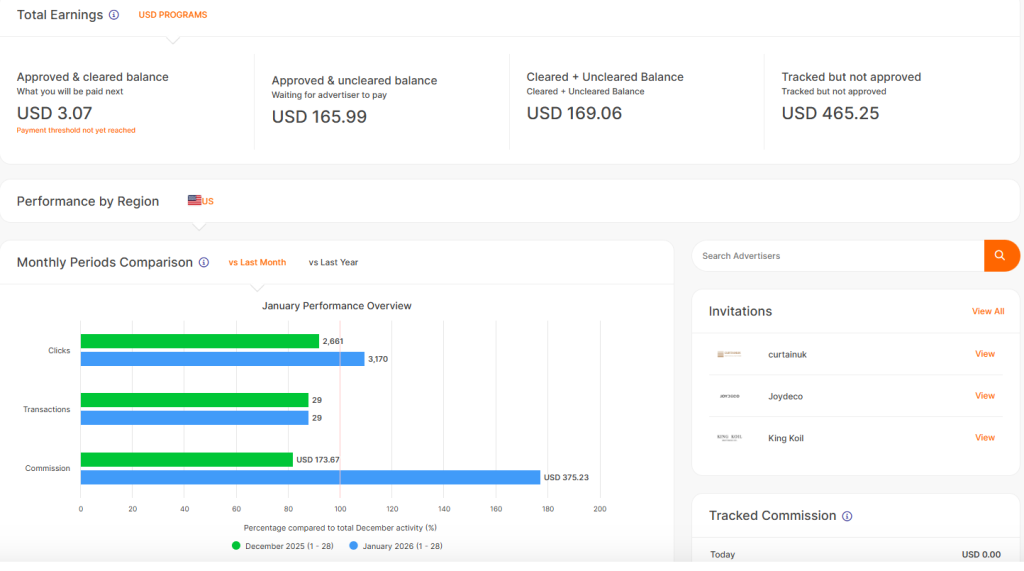
ShareASale merged with Awin but still operates. It's one of the oldest networks (1998) with over 6,500 merchants. While it leans toward physical products, there's solid digital product representation.
Current Major Vendors
- Numerous SaaS companies
- Software tools
- Online courses
- Digital marketing platforms
- E-commerce platforms
- Mix of big brands and smaller merchants
Ease of Use
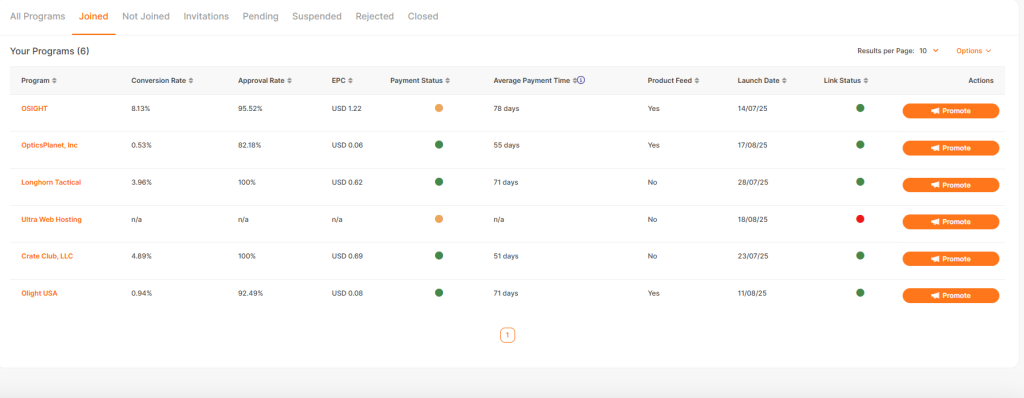
Link Generation: Simple. Use the “Custom Link Generator” in your dashboard. Paste any merchant URL, click “Create Custom Link,” and get your tracking link. They have an in-house link shortener too.
Deep Linking: YES. ShareASale supports deep linking to specific product pages. You can create custom affiliate links to any page on a merchant's website as long as the merchant allows it.
Browser Extension: NO official browser extension currently available.
Affiliate Database: Large searchable merchant directory. Filter by category, commission rate, network earnings, and more. Each merchant listing shows:
- Commission structure
- Cookie duration
- Average sale amount
- Reversal rate
- Whether deep linking is allowed
API: YES. ShareASale has an Affiliate API with these capabilities:
- Daily stats reports
- Monthly summary reports
- Transaction details
- Merchant search by product keyword
- Banner/creative retrieval
- Performance tracking
The API uses standard REST architecture with URL-based requests. It requires authentication via API token and secret key. Limited to 200 API calls per month for standard affiliates, which means data updates happen once daily max.
Pros
- Massive merchant selection (6,500+ brands)
- Mix of digital and physical products
- Clean, intuitive interface
- Deep linking supported
- Detailed reporting and analytics
- Transparent commission structures
- $50 minimum payout
- Multiple payment options
- Free to join as publisher
- Make-A-Page feature for custom promotional pages
- Product showcase widgets
Cons
- 200 API calls/month limit is restrictive
- API can only update data once per day due to rate limits
- More retail-focused than pure digital
- Commission rates often lower than ClickBank for digital products (typically 5-20%)
- Some users report clunky reporting interface
- Approval required for each merchant program
- Can't pull click statistics via API (need manual CSV export)
- Using authenticator to login every time is a pain
Bottom Line: ShareASale is reliable and established. It's great if you want options across both digital and physical products, but the API limitations frustrate anyone trying to automate workflows.
5. CJ Affiliate (Commission Junction)
Best For: Major brands and established publishers
CJ Affiliate is one of the OG affiliate networks, founded in 1998. It generates 150 million+ transactions annually with $16 billion in revenue. It's massive, corporate, and connects you with household names.
Current Major Vendors
- Barnes & Noble
- Priceline
- IHG Hotels & Resorts
- Major software companies
- Travel brands
- Finance companies
- 2,696+ different merchants (7,000+ programs total)
Ease of Use
Link Generation: Decent. Once approved to merchant programs, you generate links through the dashboard. Select your merchant, grab text links or banners, and copy the code.
Deep Linking: YES—and it's actually good. CJ was the first major network to introduce a Deep Link Generator bookmarklet. You drag it to your browser toolbar, browse to any product page on a merchant's site, click the bookmarklet, and it generates an affiliate deep link on the spot. Works on Chrome, Firefox, Safari.
The bookmarklet now has mobile responsive design, so you can generate links from your phone.
Browser Extension: Not technically an extension, but the Deep Link Generator bookmarklet functions similarly. It's a browser-based tool that lets you create affiliate links directly from merchant product pages without logging into the CJ dashboard.
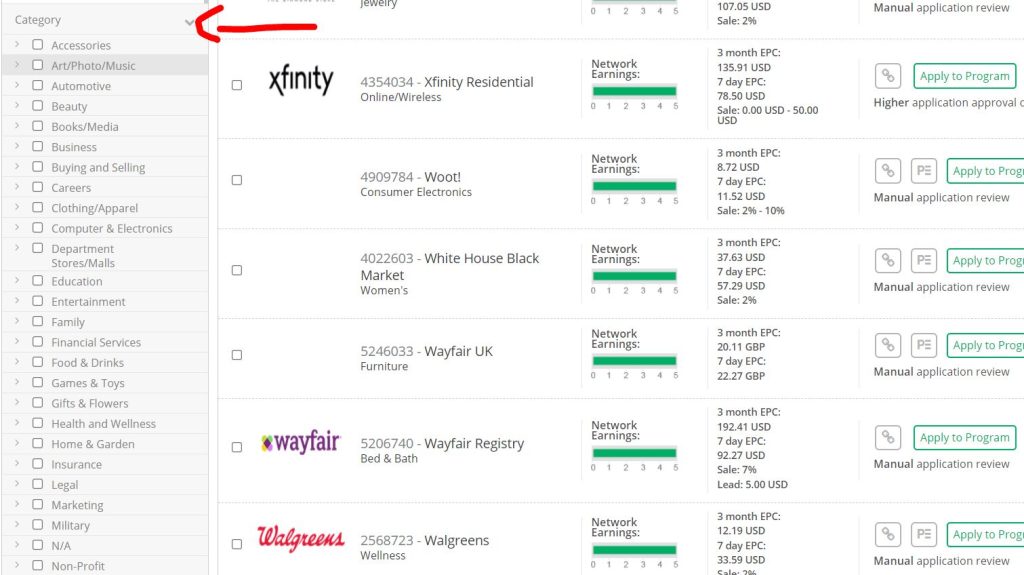
Affiliate Database: Large searchable network. You can filter by:
- Advertiser category
- Commission type
- Deep linking capability
- Network earnings
The interface shows which advertisers allow deep linking with a checkbox filter.
API: YES. CJ offers a Personal Access Token-based API with:
- Transaction reporting
- Performance metrics
- Advertiser data
- Product catalog access
- Real-time tracking
The API documentation is available through the CJ Developer Portal. However, users report frequent API disruptions that can take days for CJ to fix. The API also doesn't provide click-through statistics—you need to manually export CSV files for click data.
Pros
- Massive brand access (Fortune 500 companies)
- Deep Link Generator bookmarklet is incredibly convenient
- Works on desktop and mobile browsers
- Detailed tracking and reporting dashboard
- 7,000+ affiliate programs
- Advertisers who allow deep linking average 50%+ more sales
- Fraud detection tools
- Scalable for long-term growth
- Strong B2C brand focus
Cons
- Interface is dated and clunky (users consistently complain)
- Complex, unintuitive dashboard
- Slow reporting system
- Must individually apply to each merchant (approval not guaranteed)
- High transaction fees for merchants (~30% revenue share)
- API issues are frequent and take days to resolve
- Can't pull click stats via API (manual CSV export required)
- Not all merchants support deep linking
- Customer service gets mixed reviews
- Setup costs for merchants are high, limiting smaller vendors
Bottom Line: CJ Affiliate gives you access to major brands and has the best browser-based deep linking tool. But the platform feels old, the API is unreliable, and the user experience is frustrating. Worth it if you need those big-name brands.
Quick Comparison Table
| Network | Best For | API | Deep Linking | Browser Tool | Commission Range | Cookie Duration | Minimum Payout |
|---|---|---|---|---|---|---|---|
| PartnerStack | B2B SaaS | ✅ Full REST | ✅ Wildcard | ❌ | Up to 30% | Up to 90 days | $5 |
| ClickBank | Info products | ✅ RESTful | ⚠️ Limited | ❌ | 50-75%+ | 24h-90 days | $10 |
| Impact | Premium brands | ✅ Best-in-class | ⚠️ Merchant-dependent | ❌ | Varies widely | Varies | Varies by merchant |
| ShareASale | Mixed digital/physical | ✅ Limited calls | ✅ Yes | ❌ | 5-20% typical | Varies | $50 |
| CJ Affiliate | Major brands | ✅ Unreliable | ✅ Best tool | ✅ Bookmarklet | Varies widely | Varies | Varies |
The Verdict
For SaaS affiliates: PartnerStack is unbeatable. Clean interface, automated payouts, strong API, and programs that actually convert.
For digital course/ebook promoters: ClickBank still dominates despite its sketchy reputation. The commissions are too good to ignore if you vet products carefully.
For serious publishers with traffic: Impact.com offers premium brands and bulletproof tracking. You'll work with companies people trust.
For flexibility across product types: ShareASale gives you options. The merchant selection is huge, though the API limits are annoying.
For major brand access: CJ Affiliate connects you with household names, and that Deep Link Generator bookmarklet is legitimately useful—if you can tolerate the dated interface.
None of these networks have perfect browser extensions for grabbing links on the fly (CJ's bookmarklet comes closest). If that's a dealbreaker, you might need to combine networks with third-party link management tools.
Pick based on what you're promoting and who your audience is. The “best” network is the one with products your audience actually wants to buy.