
For the past few years, most people building with AI have really been building automations.
You connect triggers to actions, add a few logic steps in between, and suddenly work that used to take hours now happens automatically. Whether it’s sending emails, generating content, organizing leads, or updating databases.
But now we’re starting to move from AI automation to agentic workflows (cutting down all manual labor building the workflow)
AI Automation Is About Building Procedural Steps
AI automation is fundamentally procedural.
You define the steps.
You design the flow.
You decide what happens when something goes wrong with IF THEN logic.
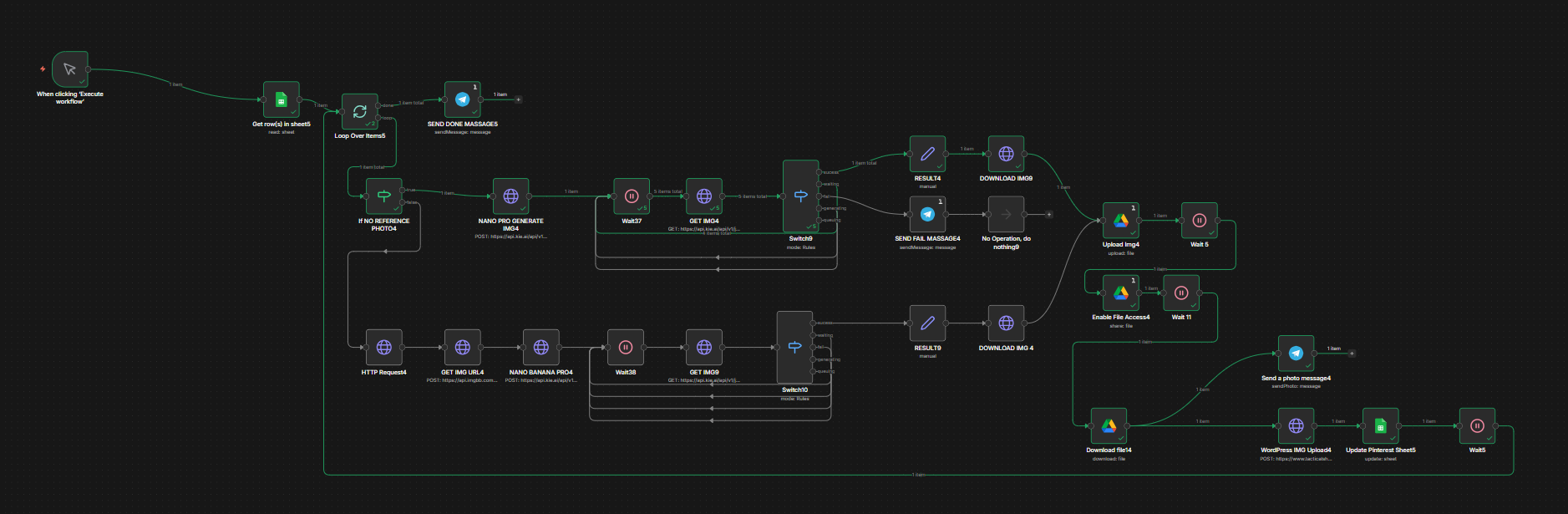
AI helps execute pieces of the workflow, but the structure still comes from you.
Most automations look like this conceptually:
Trigger → Process → Process → Process → Result
Even when AI is involved, it’s usually just one step in a larger sequence. The automation still depends on clearly defined logic and predictable inputs.
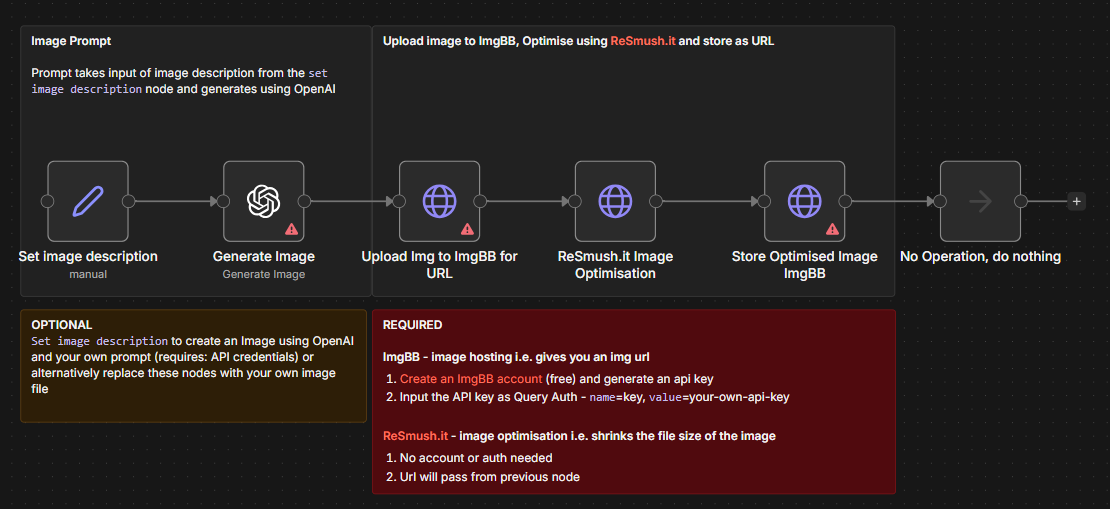
This works extremely well when:
- The task is repetitive
- The inputs are structured
- The decision-making is simple
- The process rarely changes
Automation reduces effort, but it still requires you to engineer the system.
And over time, that system grows.
More conditions.
More branches.
More formatting steps.
More maintenance.
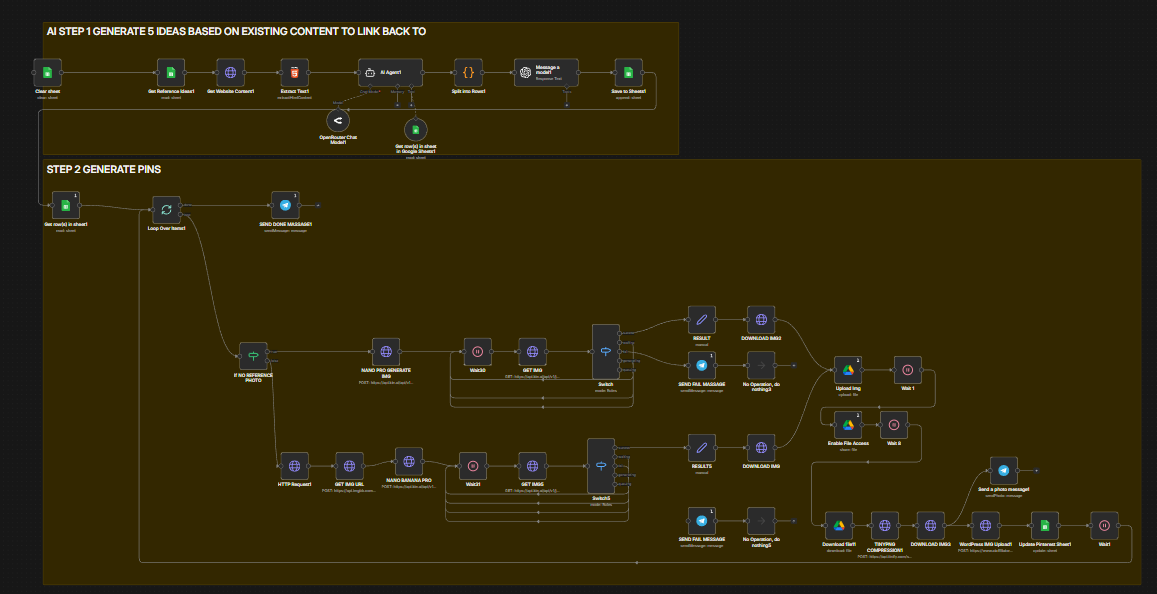
Eventually, the workflow becomes harder to manage than the task it replaced. Literally half of the above workflow can be done with agentic workflow, and you can plug the trigger to it.
It's like telling the chef to make a pizza, and the chef knows all the tools and recipes, and even where to get the stuff, and you get the pizza at the end.
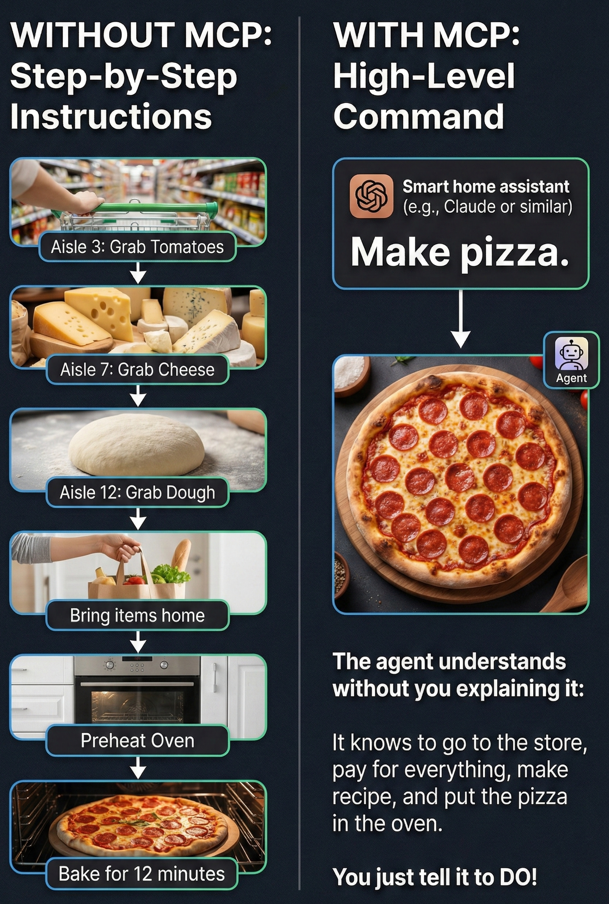
Agentic Workflows Are About Outcomes
Agentic workflows change the role of AI inside the system.
Instead of AI being one step in the process, AI becomes the entity that handles the process itself.
You stop defining every step and start defining the goal.
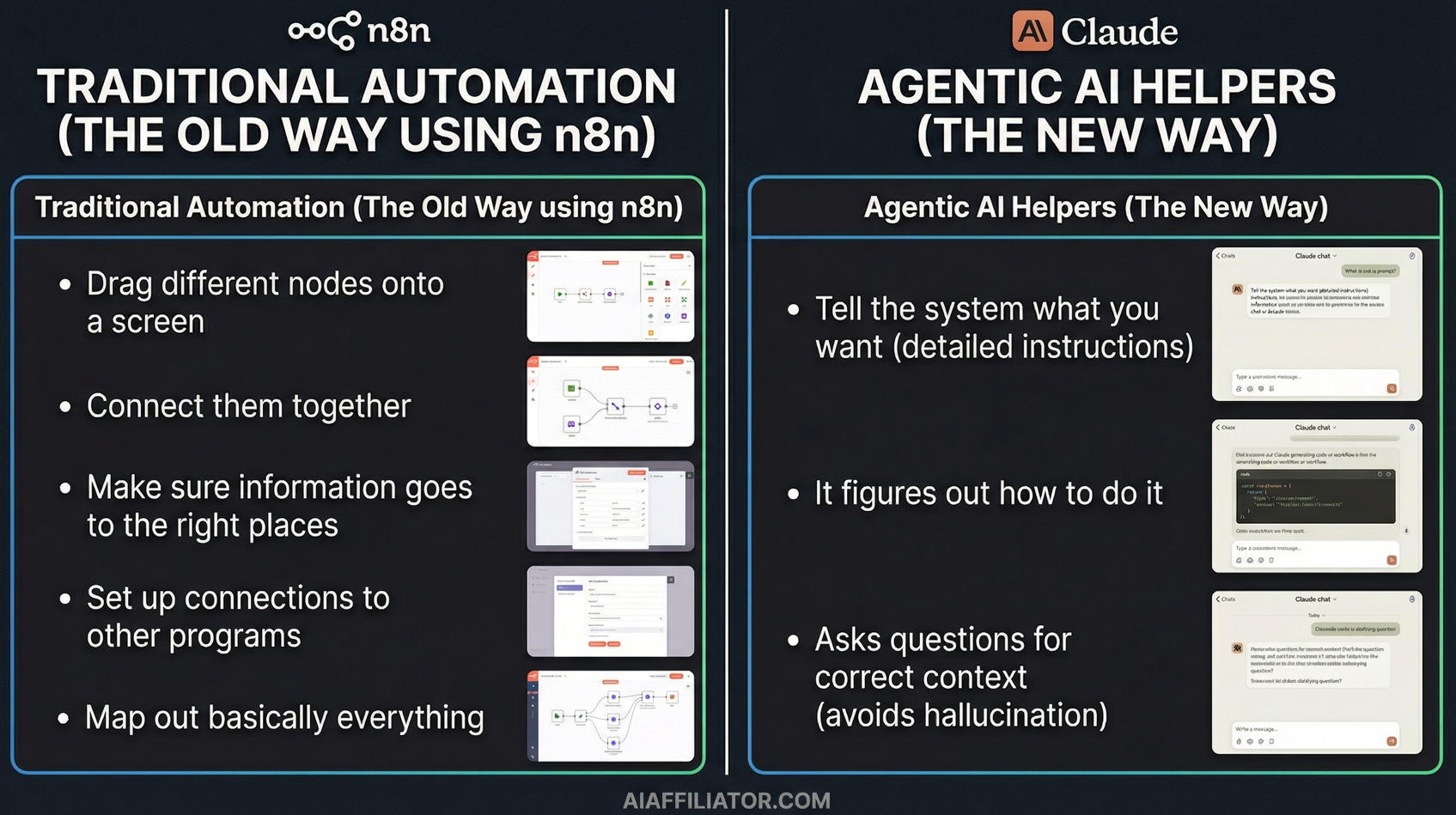
The structure becomes simpler:
Trigger → Agent → Result
All the complicated logic that used to live in the middle — formatting, lookup rules, template selection, decision paths — can now be handled dynamically.
This doesn’t remove automation.
It compresses it.
The automation layer still handles:
- triggers
- authentication
- final actions
- integrations
But the reasoning layer moves into the agent.
That’s the transition.
The Middle Layer Disappears
The easiest way to understand agentic workflows is this:
Automation builds the machine.
Agents operate the machine.
Before, complex workflows often required dozens of steps to handle edge cases and variations. Every new scenario meant expanding the workflow.
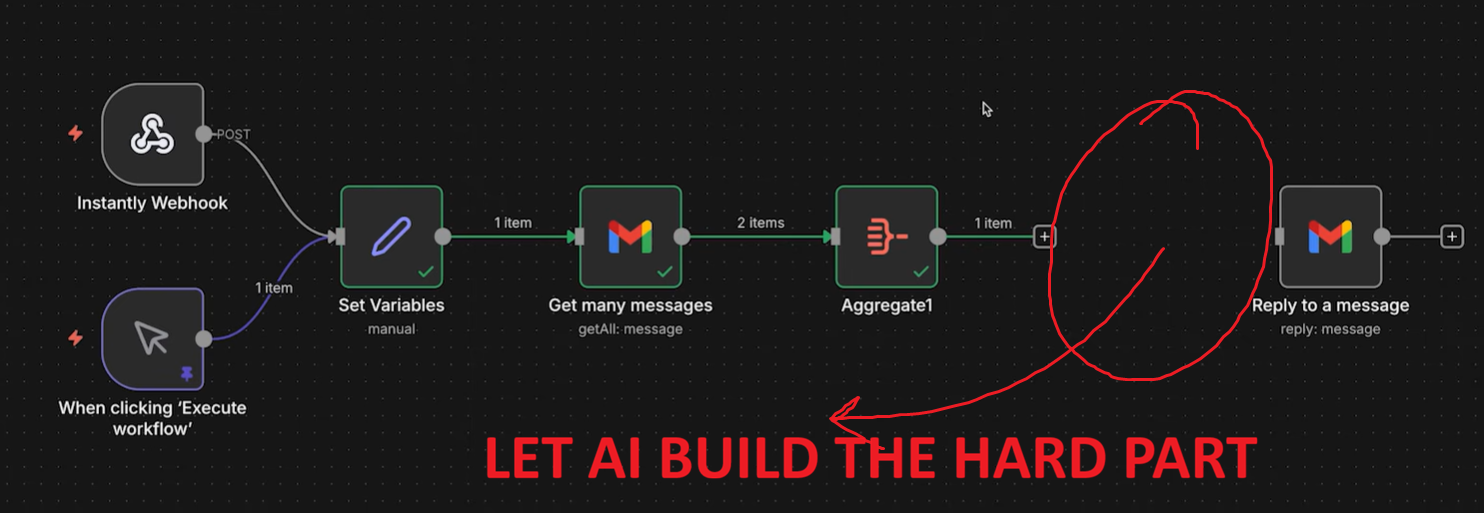
Agentic workflows flip that pattern.
Instead of expanding the workflow, the system becomes more adaptable internally.
The workflow gets shorter.
The capability increases.
Maintenance drops.
This is why agentic workflows often look deceptively simple from the outside.
Why This Feels Like a Natural Evolution
Agentic workflows aren’t replacing automation.
They’re the next layer on top of it.
Automation solved execution.
Agents solve decision-making.
Automation removed manual labor.
Agents remove procedural complexity.
This is why the transition feels so smooth for people already building automations. The outer structure stays familiar — triggers still trigger things, results still get delivered — but the internal logic becomes flexible.
It’s less about learning something completely new and more about letting go of over-engineering the middle.
The Real Benefit Isn’t Speed
At first glance, it seems like agentic workflows are about building things faster.
But the real benefit is maintainability.
Traditional automation systems grow more fragile as they grow more complex. Every update risks breaking something else. Every new requirement adds more logic.
Agentic workflows reduce that burden.
Instead of updating workflow logic constantly, you update:
- context
- examples
- goals
- constraints
The system adapts without needing to be rebuilt.
That’s a very different way of thinking about building systems.
A Simple Mental Model
Automation is like writing a recipe.
Agentic workflows are like hiring a chef.
With automation, you specify each step precisely.
With an agent, you describe the dish you want — and the system figures out how to make it.
Both approaches are useful.
But one scales complexity much better.
Where Things Are Heading
Most systems now still combine the following:
- automation for structure
- agents for reasoning
This hybrid model is becoming the practical middle ground between:
- no-code automations
- fully autonomous AI systems
And for many builders, it’s the most stable way to move forward.
You just stop forcing it to do work it was never designed to handle.